Wednesday, February 2, 2011

すきなもの

たのしいことがたくさんあります。それで、わたしのすきなものもたくさんあります。ここに2,3つあります。

ほんをよむ

子どもの時、はははわたしにおとぎばなしの本をよんでくれていました。まだうちにおとぎばなしの大きい本が二さつあります。はじめじびんで本をよみたいでした。今、本がたくさんあります。ほんだながふたつありますよ!そして本だながこんでいます。

「ナンシードル」(Nancy Drew)ははじめだいすきなほんでした。それから、「ハリーポター」(Harry Potter)がいちばんいいでした。いま、Orson Scott Cardのほんの「Ender's Game」がだいすきです。


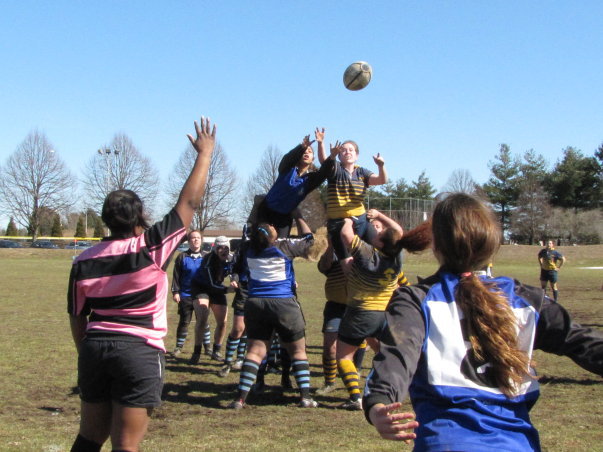
ラグびをする

大学の一年生のとき、はじめラグビをしました。とてもたのしいですね!


ぼうけんをしにいく

バジニアからきましたから、ニューヨークのなかでいろいろなところを見たいです。たくさんおもしろいものができて、みられます。「Times Square」へりょこうがすきです。さいきん、かれと「FAO Schwartz」へいきました。

Wednesday, January 26, 2011

ふゆ安み

ここはパイはとてもあつかったですよ!
わたしのふゆ安みはすてきでした。あにとあそびましたが、ゆきにあそびませんでした。たいへんですね。でも、あにととてもたのしいじかんです。いっしょにパンプキンパイをりょうりをしました!パイはとてもおいしかったです。


そしてりゅうしんにあいました。はははおげんきです。いいですね。ちちもおげんきです。ちちのあたらしいおくさんとちちのせいかつはすてきです。いまさびしくないです。
このしゃしんはあにとちちとちちのおくさんとわたしです。
わたしのクリスマスはとてもおもしろかったです。午前十二時にははとあにとプレゼントをあけました。それから、朝ちちのかぞくとニュージャージーへパーティーをしにいきました。それから、正月(new year)にははのかぞくとニューヨークへいきました。とてもいそがしかったですね!

でも、今クラスがありますよ!

Monday, December 13, 2010

Katakana Analysis: Final

Through this project, I have come to a new understanding of katakana as both a language and a cultural icon. To me, katakana is a way of relating to the rest of the world while still maintaining cultural identity. It is an alphabet that is uniquely Japanese, but if it were only used for foreign words, how “Japanese” could it really be? It would soon be phased out as an alphabet just as foreign as the foreign words it replaces. The complete integration of katakana into the Japanese language – through its many varied uses – demonstrates the complete “Japanese”-ness of katakana. Thus, while katakana was developed for the incorporation of foreign words into the Japanese vocabulary, it has, since then, taken an important role in Japanese language that is, essentially, irreplaceable.

On a bag of Haruya kani chips, the katakana expression “カニチップ “ is used. “カニ” is the Japanese equivalent for “crab”.  “チップ” reads as “chip”, an English loan word directly converted into katakana. According to various sources, katakana is often used on things such as signs or advertisements in order to place emphasis on a word or phrase – similar to the Western use of italics (“Katakana”). As emphasis, using katakana in this setting makes sense. The simpler, sharper strokes of katakana are much easier to pick out, and make more of an impression to the eye, than the more complicated kanji or rounded hiragana. Since katakana is also generally used for foreign words, the use of katakana here can also boost the company’s reputation among consumers by emphasizing its status as a product that is internationally traded. This, of course, makes it a more popular commodity as internationally traded products must be good in order to survive (so the consumer assumes), and this also takes advantage of the prestige of “Western” products. “Western” has this idea attached to it of success and authority, and “Western” things are more generally in demand in Japan than local products. Thus, a bag with Katakana – a “foreign” product – will sell better simply because of its associations with the Western world.


Another popular katakana expression is “カラオケ” or “karaoke”. It can be found on signs all over downtown Manhattan (for a more specific example, look to the sign for Duet 48, a karaoke bar in Midtown East, NYC). According to one source, “karaoke” is commonly written in katakana because it is a relatively new word whose kanji form has not yet been formed (Timmermeyer). This makes sense, because karaoke was only introduced around the 1980s (“karaoke”).  The word “karaoke” is actually a combination of the Japanese word “kara” meaning empty, and “oke”, a shortened form of the katakana for “orchestra” (“karaoke). Basically, it seems as though “karaoke” was created as a fad, and as it grew more popular, it took on the name meaning “empty orchestra” because it was the easiest way to describe or name it at the time. As of yet, it is written wholly in katakana because a proper kanji character has not yet been assigned to it. I also venture to guess that its worldwide appeal leads it to stick to katakana because of its foreign audience.
           A question was brought up about whether or not a kanji character would be assigned to “karaoke”. I think a better question to ask is whether or not the kanji would be used if it were ever assigned. “Karaoke” already has wide appeal; it’s recognizable and everyone, both Japanese people and those of foreign descent can easily read it with only a basic kana understanding of the Japanese language.

Textbook differences:
In class, we were given excerpts from four different textbooks explaining the different writing systems and their uses. They were all fairly short and very general in their descriptions of katakana in particular. They differed slightly in their presentation of the material, mostly due to the amount of lines devoted to katakana.
The shortest descriptions – the most minimal – made sure to mention that katakana employs more angular, simple characters generally used for foreign names and loan words. The more detailed descriptions also mentioned katakana usage for onomatopoeia and emphasis.
I think the short description was the most simplified definition of katakana, meant for the slower beginner language learners, as well as for those language learners who are only interested in learning a glimmer or overview of the language without going into the complexity of form and use. This short description introduces one use of katakana that can be easily understood, and leaves the more complex usages to be learned as the student advances in his/her language studies. This is comparable to my Japanese class where we learn one use of a hiragana particle at a time, instead of all its purposes at once. The longer descriptions that included onomatopoeia and emphasis usages were more geared towards the advanced language learner and those interested in the more street-common uses of words. These descriptions provide as much information as possible, yet in a general format, giving the sense that perhaps it is only meant to serve as a reminder for someone who has previously studied the language.

Sources:
            "Karaoke." Dictionary.com. < http://dictionary.reference.com/browse/karaoke>
            "Katakana." n.d. Wikipedia. <http://en.wikipedia.org/wiki/Katakana>.
            Timmermeyer, Kyle. "Writing Japanese Katakana: Characters that Emphasize New and Foreign Words." 23 September 2008. suite101. 1 November 2010 <http://www.suite101.com/content/writing-japanese-katakana-a69894>.

Monday, December 6, 2010

二十年のわたし

二十年のわたしはいいせいかつがあります。シヴィルエンジニアのなかでわたしはいちばんいいです。タイムざっしはわたしのいろいろなビルについてかきます。

わたしのうちはせまくないです。おおきいです。ニューヨークにあります。そしてもううちがありますが、それはわたしのうちよりちいさいです。なつのうちはにほんにあります。ふゆのうちはフィリピンにあります。

うちのせいかつはにぎやかですが、とてもいいです。こどもがふたりぐらいいます。とてもハンサムなひとにけっこんします。そちらはあたまがよくてしんせつです。おっとはかんぺきですよ。わたしのかぞくはいぬがいます。いぬのなまえは「ジェーク」です。

わたしのしょうらいのせいかつはいいですね。

Wednesday, November 24, 2010

Thanksgivingのやすみ

みなさん、こんばんは。

今バスにいます。バスでわたしのうちまで五時かんぐらいかかります。もう四時かんかかりました。うちはちかいです!

今しゅうのしゅうまつはとてもいそがしいです。あしたはThanksgivingです。わたしのかぞくのなかで、みなさんはりょうりをふたつりょうります。でも、ことしだいがくのせいかつはとてもいそがしいでちたから、わたしのりょうりがわかりません!

あさって、ちちのけっこんです。パーテイがひとがおおいいます。おもしろいですが。。。たのしいですか?わかりません。

三日間わたしはうちにいます。わたしのかぞくにあいます!


イザベラ

Thursday, November 18, 2010

Literary Work

My limited knowledge in the different grammatical forms of にほんご makes this first attempt at a poem sound pretty strange!


ありますか、いますか


にほんごで「きがあります。」ですね。

でも、
ちいさいからおおきいまで
きがセイチョースル。。。

どうして「イマス」じゃありませんか。

ははきのいちばんうえで
にっこうをタベマス、
くうきをスイマス。。。


どうして「イマス」じゃありませんか。


The Japanese saying is “A tree exists”, isn’t it?

But,
From small to large
A tree grows

Why doesn't it “exist”?

The leaf at the top of the tree
Eats sunlight,
Breathes air...

Why doesn't it "exist"?

Wednesday, November 10, 2010

山田さんにてがみをかきます。

山田さんへ、

 はじめまして。わたしはイザベラ・ゴンザレスです。十九さいです。アメリカのバージニアからきました。コロンビアだいがくのニねんせいです。どうぞよろしく。
 コロンビアだいがくはニューヨークにあります。ちいさいですが、とてもきれいです。しずかじゃありません。ふるいです。そしてじゅぎょうりょうがたかいです。
 エンジニアのがくせいです。わたしのせいかつはとてもいそがしいですが、とてもおもしろいです。いまにほんごとにほんのアートをべんきょうしています。にほんごがすこしわかります。
 にほんごをべんきょうしますから、らいねんのなつににほんへいきます。六月一日にいきます。
    よろしくおねがいします。

十一月九日  イザベラ・ゴンザレス

Thursday, November 4, 2010

Katakana Analysis Draft

The uses of katakana are many and varied, a fact that I was not aware of until my Japanese class began to discuss this subject. Here are some of my thoughts and findings:

On a bag of Haruya kani chips, the katakana expression “カニチップ “ is used. “カニ” is the Japanese equivalent for “crab”.  “チップ” reads as “chip”, an English loan word directly converted into katakana. According to various sources, katakana is often used on things such as signs or advertisements in order to place emphasis on a word or phrase – similar to the Western use of italics (“Katakana”). As emphasis, using katakana in this setting makes sense. The simpler, sharper strokes of katakana are much easier to pick out, and make more of an impression to the eye, than the more complicated kanji or rounded hiragana. Since katakana is also generally used for foreign words, the use of katakana here can also boost the company’s reputation among consumers by emphasizing its status as a product that is internationally traded.


Another popular katakana expression is “カラオケ” or “karaoke”. It can be found on signs all over downtown Manhattan (for a more specific example, look to the sign for Duet 48, a karaoke bar in Midtown East, NYC). According to one source, “karaoke” is commonly written in katakana because it is a relatively new word whose kanji form has not yet been formed (Timmermeyer). This makes sense, because karaoke was only introduced around the 1980s (“karaoke”).  The word “karaoke” is actually a combination of the Japanese word “kara” meaning empty, and “oke”, a shortened form of the katakana for “orchestra” (“karaoke). Basically, it seems as though “karaoke” was created as a fad, and as it grew more popular, it took on the name meaning “empty orchestra” because it was the easiest way to describe or name it at the time. As of yet, it is written wholly in katakana because a proper kanji character has not yet been assigned to it. I also venture to guess that its worldwide appeal leads it to stick to katakana because of its foreign audience.

Textbook differences:
In class, we were given excerpts from four different textbooks explaining the different writing systems and their uses. They were all fairly short and very general in their descriptions of katakana in particular. They differed slightly in their presentation of the material, mostly due to the amount of lines devoted to katakana.
The shortest descriptions – the most minimal – made sure to mention that katakana employs more angular, simple characters generally used for foreign names and loan words. The more detailed descriptions also mentioned katakana usage for onomatopoeia and emphasis.
I think the short description was the most simplified definition of katakana, meant for the slower beginner language learners. It introduces one use of katakana that can be easily understood, and leaves the more complex usages to be learned as the student advances in his/her language studies. This is comparable to my Japanese class where we learn one use of a hiragana particle at a time, instead of all its purposes at once. The longer descriptions that included onomatopoeia and emphasis usages were more geared towards the advanced language learner, presenting as much information as possible in a general format – perhaps to serve as a reminder for someone who has previously studied the language.

Sources:
"Karaoke." Dictionary.com. < http://dictionary.reference.com/browse/karaoke>
"Katakana." n.d. Wikipedia. <http://en.wikipedia.org/wiki/Katakana>.
Timmermeyer, Kyle. "Writing Japanese Katakana: Characters that Emphasize New and Foreign Words." 23 September 2008. suite101. 1 November 2010 <http://www.suite101.com/content/writing-japanese-katakana-a69894>.

Monday, October 25, 2010

わたしのたんじょうび (^。^)

きのうごぜんにじねました。With midterms, あさからばんまでべんきょうします!(at least, it seems that way...) I had so much to study、 そして I thought わたしのたんじょうびはたのしくないでした。

じゃありませんでした。

suiteのたもだちはsigned long pieces of paper towel and taped them over my door after I went to bed last night. ともだちにhugsをもらいました。ははにプレーゼントをもらいました。メイヤソンさんにカードとプレーゼントをもらいました。プレーゼントはスターバクスのカードです。すてきですね!

But now I have to go. いまラグビ(rugby)をします。それからごぜんまでべんきょうします!

Tuesday, October 12, 2010

At least I'm learning

まいあさわたしはしちじにおきます。まいばんごぜんさんじにねます。クラスおよじおわります。かようびともくようびにあるばいとします。げつようびとすいようびにrugbyします。それからべんきょうします。This is a great formula for exhaustion! But sometimes, it's worth it.

せんしゅう にほんのアートのせんせいはHeian Periodをtaught. Court life at that time was so fascinating! It was the rise of art and culture.

As Hirschさん talked about in her blog some time ago, Japanese is sexist. Women learned the kana alphabet (known as "women's hand") and men learned the more difficult kanji. The joke is that while men were struggling with kana, women became the scholars - they read and wrote the great classics, such as the Tale of Genji.

It was really cool when my professor talked about how "membership" in the courtesan lifestyle required cultural accomplishments, knowledge of literature and poetry, and also the ability to write in a beautiful hand. Everyday they conversed through the exchange of poetry! The smallest mistake - such as a badly chosen poem, or a note written on the wrong type of paper - could lead to the ruin of one's reputation and life at court.

Living in this period seems really interesting, but I'm not sure I would be able to deal with the pressure...